
Your shopping cart is empty!
Manufacturers
- Accortec, Inc.
- Addon Tech
- Advantech Co., Ltd
- Axiom
- BLACKBOX
- C2g
- Chief Manufacturing
- Cisco
- Dell
- EATON
- EMC
- Enet Components, Inc.
- Fortinet
- Getac, Inc
- HP
- HPE
- IBM
- Intel
- Legrand Group
- Lenovo
- Lexmark
- Middle Atlantic Products, Inc
- Monoprice, Inc
- National Products, Inc
- Panduit Corp
- StarTech.com
- Supermicro
- TDK
- Tripp Lite
- Veritas Technologies Llc
Google Translate
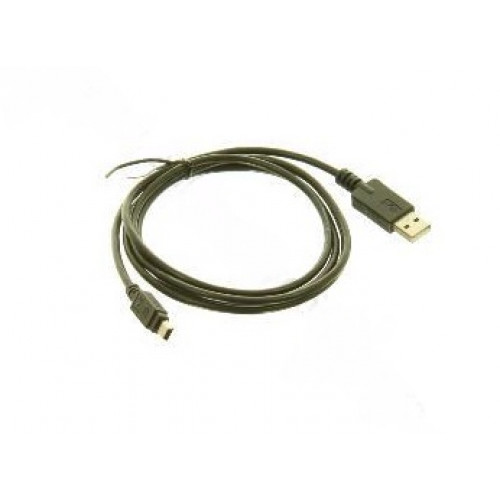
HP Cable Command Line Interface USB 6FT 592266-001
Price: $142.40
Qty:
- OR -
Add to Wish List
Add to Compare
Add to Compare

HP Cable Command Line Interface USB 6FT 592266-001
Product Description
The HP 592266-001 CLI USB cable is a command-line interface (CLI) access cable designed to provide direct console-level communication between a host system (typically a laptop/PC) and supported HPE servers or storage arrays.
It enables local management, configuration, diagnostics, and firmware interaction without requiring network connectivity or GUI-based tools.
This cable is commonly used in data center, field service, and secure environments where direct hardware access is required.
Key Specifications
General
- Manufacturer: Hewlett Packard Enterprise (HPE)
- Part Number: 592266-001
- Product Type: CLI USB Interface Cable
- Category: Server / Storage accessory cable
- Length: ~6 ft (≈1.8 m) (industry standard for this part class)
Interface & Connectivity
- Cable Type: USB data transfer / CLI cable
- Connector A: USB Type-A (Male)
- Connector B: USB Mini-B (Male)
- Interface Function: USB-to-Serial (internal conversion)
- Signal Type: Converts USB signals to serial console communication
Functional Characteristics
- Provides direct CLI (console) access to hardware
- Enables:
- System configuration
- Firmware updates
- Diagnostics and troubleshooting
- Low-level management of “headless” systems
- Plug-and-play with supported HPE systems
- Requires USB driver support on host OS for serial interface recognition
Compatibility
- Widely used with:
- HPE MSA Storage Systems (P2000, MSA 1040, MSA 2040)
- HPE ProLiant servers
- BladeSystem environments
- Recognized across 200+ HPE systems
Physical / Build
- Compact, lightweight cable design
- Durable construction for data center and field technician use
- Typically black industrial-grade cable
Use Cases
- On-site server provisioning
- Emergency access when network management is unavailable
- Secure environments where remote access is restricted
- Firmware flashing and low-level configuration
Operational Overview
Internally, the cable leverages a USB-to-serial conversion mechanism, allowing a modern USB port to emulate a traditional serial console connection.
This makes it functionally equivalent to a console cable, but with USB convenience instead of RS-232.
Write a review
Your Name:Your Review: Note: HTML is not translated!
Rating: Bad Good
Enter the code in the box below:
Partschase.com © 2026