
Your shopping cart is empty!
Manufacturers
- Accortec, Inc.
- Addon Tech
- Advantech Co., Ltd
- Axiom
- BLACKBOX
- C2g
- Chief Manufacturing
- Cisco
- Dell
- EATON
- EMC
- Enet Components, Inc.
- Fortinet
- Getac, Inc
- HP
- HPE
- IBM
- Intel
- Legrand Group
- Lenovo
- Lexmark
- Middle Atlantic Products, Inc
- Monoprice, Inc
- National Products, Inc
- Panduit Corp
- StarTech.com
- Supermicro
- TDK
- Tripp Lite
- Veritas Technologies Llc
Google Translate
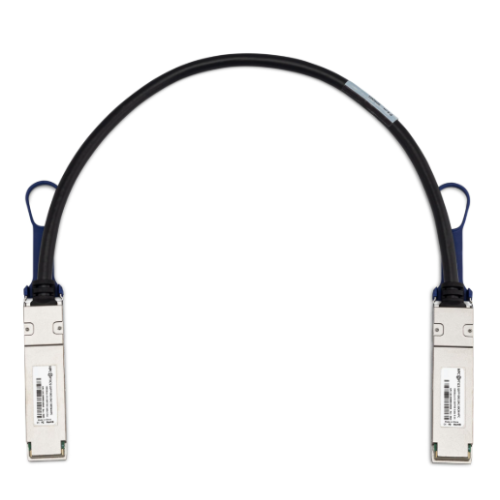
HPE Cable Infiniband Enhanced Data Rate (EDR) Copper QSFP to QSFP 0.5m 836247-001
Price: $109.00
Qty:
- OR -
Add to Wish List
Add to Compare
Add to Compare

HPE Cable Infiniband Enhanced Data Rate (EDR) Copper QSFP to QSFP 0.5m 836247-001
Description
The HPE 836247-001 is a short-range, high-performance InfiniBand EDR (Enhanced Data Rate) direct attach copper (DAC) cable designed for low-latency, high-bandwidth interconnects between servers, storage, and switches in high-performance computing (HPC) and data center environments.
It uses QSFP28 connectors on both ends and is optimized for 100Gb/s InfiniBand EDR throughput, providing a cost-effective alternative to optical transceivers for short distances.
Key Specifications
- Cable Type: Direct Attach Copper (DAC) Twinax
- Protocol: InfiniBand EDR
- Data Rate: Up to 100 Gb/s
- Connector Type: QSFP28 to QSFP28
- Cable Length: 0.5 meters (0.5 m)
- Form Factor: Passive copper cable
- Compatibility: HPE servers, storage, and InfiniBand switches supporting QSFP28 interfaces
- Impedance/Medium: Twinax copper
Functional Characteristics
- Provides low latency and high throughput interconnect for HPC clusters
- Supports RDMA (Remote Direct Memory Access) over InfiniBand
- Enables high-efficiency data transfer with minimal CPU overhead
- Designed for short-distance rack-to-rack or intra-rack connectivity
- Plug-and-play operation (no additional optics required)
InfiniBand EDR Features (Platform-Level Support)
- Hardware-based reliable transport
- Collective operations offload
- Reliable multicast support
- Extended Reliable Connected (XRC) transport
- Dynamically Connected Transport (DCT)
- Enhanced atomic operations
- Advanced memory mapping and on-demand paging (ODP)
Physical / Compliance
- HS Code: 85444290
- Cable Jacket: Black (typical)
- Construction: Shielded twinax copper
Typical Use Cases
- High-performance computing (HPC) clusters
- AI / ML training infrastructure
- Data center spine-leaf interconnects (short reach)
- Storage area networking with InfiniBand
Summary
The HPE 836247-001 is a 0.5m QSFP28 DAC cable delivering 100Gb/s InfiniBand EDR performance, intended for ultra-low-latency, short-distance connections inside modern data centers. It eliminates the need for optical modules while maintaining high bandwidth and reliability, making it ideal for dense, cost-sensitive deployments.
Write a review
Your Name:Your Review: Note: HTML is not translated!
Rating: Bad Good
Enter the code in the box below:
Partschase.com © 2026